
REVIEW · SWEDEN
Autumn Abisko Aurora Chase
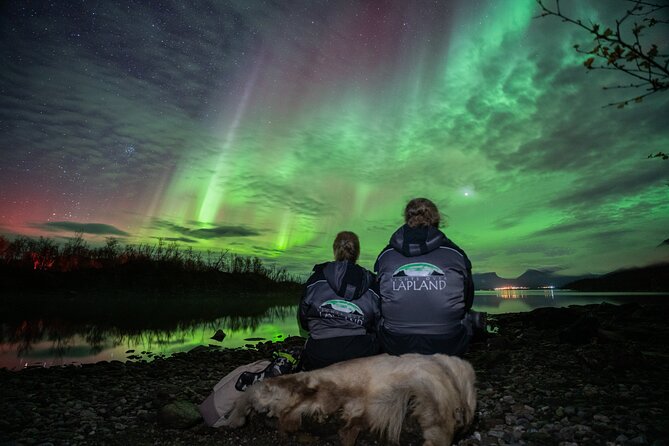
The best feature here is the flexible route. Instead of watching the sky from one fixed platform, you travel by bus for up to 100 kilometers roundtrip, stopping at places with a strong record for aurora viewing. Guides may change the plan as cloud cover and aurora activity shift.
I like the small maximum of eight people and the practical warmth plan. The bus stays nearby, and guides have used fires and hot drinks to keep the cold manageable. I also like that Joey Tristan has helped with photographs and explained everything from aurora science to odd frozen-lake details.
The tradeoff is the fixed four-hour schedule. Several stops can improve your odds, but they also mean time spent moving. If the best view is already above you, staying put might be better. You also need to bring your own serious winter clothing and camera gear.
Key points at a glance
- Up to 100 kilometers of searching: The guide can adjust the route instead of relying on one viewing spot.
- Small group size: The tour accepts no more than eight people, making questions and photo help easier.
- Pickups from Abisko and Björkliden: Hotel pickup is offered, with different ready times for each area.
- Warmth is built into the evening: You receive a warm drink, and the bus or a fire can offer relief from wind and cold.
- Photography help may be available: Joey Tristan has taken photos for participants, though camera equipment is not included.
- A real weather gamble: Poor weather can cancel the tour, but you can receive a new date or a full refund.
Why the Abisko setting suits an aurora chase
Abisko is a sensible base for a northern-lights trip because the tour can move beyond the immediate village. You start at STF Abisko Turiststation, then travel toward one or more viewing places selected for the night’s conditions.
That matters because an aurora outing is not simply a matter of arriving at a viewpoint and waiting. Clouds can cover one valley while another area has a clear sky. A mobile tour gives the guide a chance to respond instead of asking you to accept whatever happens above the starting point.
The route can extend to 100 kilometers roundtrip, which is enough to make the evening feel like a search rather than a short local transfer. The exact stops are not fixed, and that is useful. You are not promised a named landmark, but you gain flexibility when cloud cover changes.
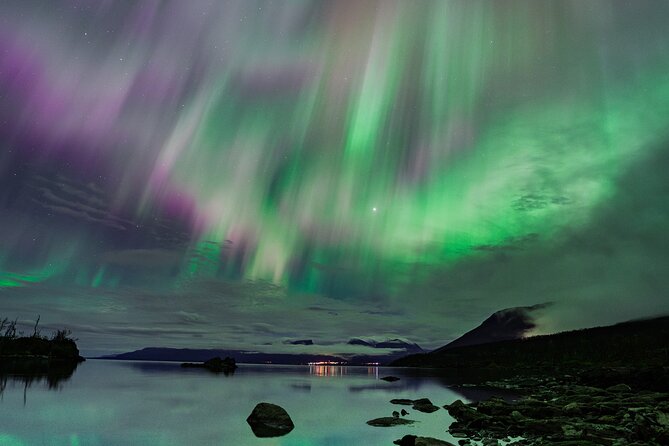
The autumn timing also affects your planning. Nights are dark enough for aurora watching, but conditions can be cold, windy, and wet or icy. You need to treat this as an outdoor night excursion, not a comfortable sightseeing bus ride.
A few more aurora nights around Sweden worth a look
- Kiruna Northern Lights Tour with Photographer
★ 5.0 · 735 reviews - The Ultimate Aurora Photo Adventure
★ 5.0 · 514 reviews - From Kiruna: Abisko National Park Northern Lights Tour
★ 4.4 · 462 reviews
From hotel pickup to the first dark-sky stop
The official start time is 8:00 pm. If you stay in Björkliden, be ready at your hotel by 7:30 pm. If you stay in Abisko village, wait in your hotel lobby by 7:45 pm. The guide meets people between 7:45 and 8:00 pm, so do not plan a late dinner or a last-minute dash back to your room.
The listed meeting point is STF Abisko Turiststation, Abisko Turiststation 2. Hotel pickup is offered from hotels in Abisko or Björkliden, which removes one small but annoying problem: finding your way to the starting point in the dark.
Once everyone is aboard, the guide decides where to search. The bus is important beyond transportation. The cold can become the limiting factor during an aurora outing, especially when wind picks up. The bus remains nearby during viewing, giving you somewhere to warm up before heading back outside.
The group limit of eight is another practical advantage. You are not dealing with a coachload of people spreading across a large viewing area. A small group also makes it easier to ask questions, request a photo, or hear the guide’s explanation without shouting.
How the moving search works
The main activity lasts about four hours and involves searching by bus. In practice, that means you may visit several places rather than spend the whole evening at one site. One outing included four viewing locations, while another added a stop or two when the northern lights appeared.
This approach makes sense when cloud cover is broken or changing. A guide can use current conditions and aurora probability to select the next place. It does not guarantee success, but it gives you more options than remaining at the meeting point.
There is also a fair criticism. Moving is not always better. If one location has clear skies and a strong display, leaving it can cost you time. Every transfer means packing up, driving, and getting settled again. The best version of this tour depends on the guide judging when to move and when to stay.
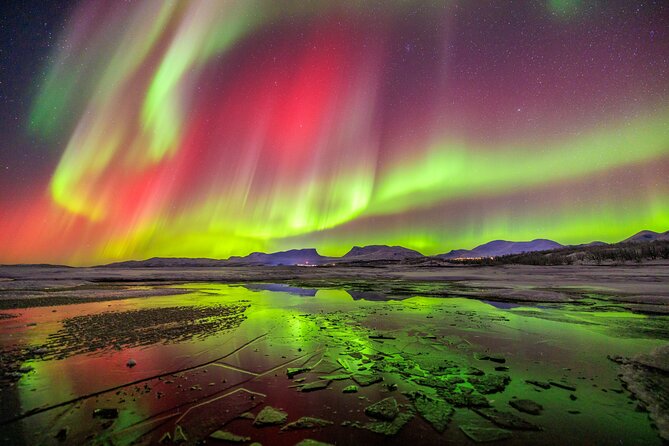
You should also understand that aurora colors often look stronger in photographs than they do to the naked eye. One outing produced a good photograph even though the aurora was not obvious in person. That is not a failure of the tour, but it is a useful expectation to set before you book.
What the guides add to the night
The guide is central to this experience. Driving to dark locations is only part of the job. You also need someone who can explain what you are seeing, monitor the conditions, and keep a group calm and warm during long periods of waiting.
Joey Tristan receives especially strong praise for her friendly manner, clear explanations, and attention to photography. She has taken photos for people outside in the cold and answered questions about the sky and the surrounding environment. On one unusual stop, she even used boiling water on a frozen lake in an attempt to clear thick ice so people could see the fish below.
That kind of moment tells you what this outing can offer beyond a standard aurora checklist. The night may include small details you would miss alone, from the shape of the ice to changes in the sky that are hard to spot at first.
Other guides named in connection with the experience include Romy, Felix, and Gavin. Felix and Gavin have helped with photography, aurora science, fires, and choosing better viewing conditions when cloud cover affected Abisko. The exact guide is not specified in advance, so you should not book on the assumption that Joey will lead your departure.
The guide may also provide cookies with the warm drink, based on the way the experience has been conducted. The confirmed inclusion is one warm drink, so bring your own snacks if you need more than that.
Same skies, a different way to chase them:
- Kiruna: Northern Lights Tour with Photos
★ 4.9 · 333 reviews - Abisko: Guided Aurora Chase with Hotel Transfers
★ 4.5 · 311 reviews - Northern Lights Tour from Kiruna to Abisko with Dinner
★ 5.0 · 311 reviews - Kiruna: Northern Lights Tour with Stejk Street Food Dinner
★ 4.9 · 231 reviews
Cold management is part of the experience
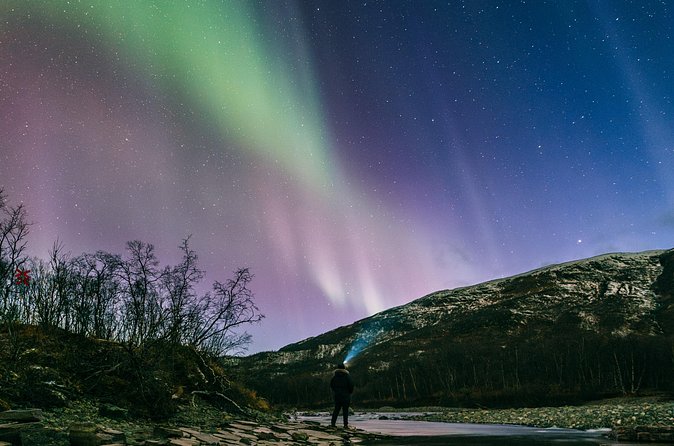
You are responsible for warm clothing. That is one of the most important practical details here. The tour does not include winter clothing, so bring proper layers, insulated footwear, gloves, a hat, and anything else you rely on for several hours outdoors.
The bus can be used to warm up, and fires have also been arranged on some outings. These are welcome features, but they do not replace suitable clothing. You may spend several stretches standing outside while the guide watches the sky. Cold feet or wet gloves can quickly turn a promising aurora night into an uncomfortable one.
Wind deserves special attention. One particularly cold and windy outing was still considered enjoyable because the group could warm up and continue moving between locations. That experience will not suit everyone. If you dislike standing outdoors at night in severe cold, a shorter fixed viewing session may be easier.
The warm drink is modest but useful. It gives you something hot during the wait and makes the stop feel more human than simply standing in a parking area. Still, think of it as a comfort detail, not a meal.
Photography: helpful support, but bring your own kit
Camera gear is not included. Bring your own camera, tripod, batteries, and any other equipment you need. The cold can drain batteries quickly, so carrying spares is wise, although the tour information does not provide a specific photography equipment list.
Guides may take photographs of you beneath the aurora. Joey has done this repeatedly, and the photos have been an important part of the evening for many people. That help is a valuable extra because aurora portraits can be difficult to arrange without a tripod, long exposure settings, or someone willing to work outside in the cold.
Do not treat guide photography as a guaranteed package inclusion, however. The confirmed inclusions are the guide, the four-hour bus search, and a warm drink. If your main goal is serious night photography, you should still prepare to operate your own camera.
You may also learn that the aurora is not always dramatic to your eyes. A camera can record faint activity more clearly, especially when the display is pale or partly hidden by cloud. A good guide can help you notice changes, but no camera can create a visible aurora when the sky is fully covered.
How the stops can differ
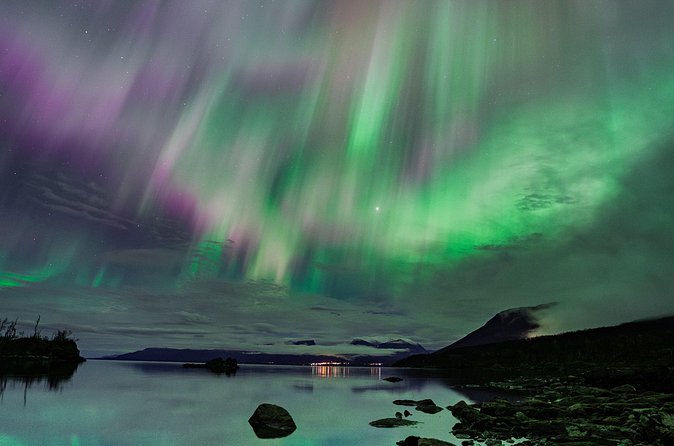
Because the exact route is not fixed, each stop serves a different practical purpose. One may offer clearer skies, another a better view away from cloud, and another a more pleasant place to wait beside a fire or near the bus.
The first stop often helps you get oriented. You can learn how the guide is reading the sky and how much time the group will spend outside before moving again. If the aurora is already active, this may become the main viewing session rather than a brief introduction.
A second or third stop can be valuable when cloud blocks the first location. The guide may use updated aurora probabilities and visible conditions to make the call. This is where the mobile format earns its keep.
A later stop may be more about patience than distance. Even if you have seen a display, the guide can give you another chance to watch for stronger activity. On some evenings, the group has added locations after the lights appeared, while on others the best choice might be to remain in one clear place.
The downside is repetition. You may spend part of the four hours boarding, driving, and getting organized. If you prefer a quiet evening with one campfire and a long wait under the sky, the moving format may feel busy.
Value for the money
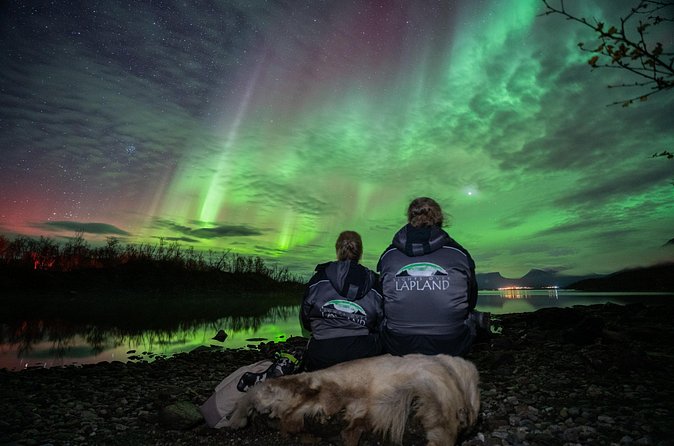
No price is provided here, so I cannot judge the exact cost. The value comes from the combination of transport, local route decisions, a small group, guide support, warmth options, and several hours of searching.
A self-guided attempt may cost less if you already have a car, know the area, and can interpret cloud and aurora forecasts. This tour is more useful if you want someone else to handle the late-night driving and location choices. It also makes sense if you want help with photographs or explanations while you wait.
The value is less certain for someone already staying beside an excellent viewing site and comfortable waiting alone. The fixed four-hour finish means you may not get the long, open-ended chase offered by some smaller operators. One outing ended on schedule even though another company was willing to remain out longer.
The small group helps justify a higher price than a basic bus transfer. Eight people is intimate enough for direct contact with the guide, though the vehicle may feel larger than a private minibus depending on the departure.
Who should book this Abisko aurora tour
I would choose this tour if you want a guided first attempt at seeing the northern lights and prefer a clear plan. It suits people staying in Abisko or Björkliden who do not want to drive at night or guess where the clouds will be thinnest.
It is also a good fit for photographers who appreciate help with portraits and settings but do not need a dedicated photography workshop. Families and mixed-age groups may like the nearby bus and the option to warm up, although everyone still needs suitable clothing.
You should think twice if you need a guaranteed display, a private guide, or an unlimited end time. The aurora remains a natural event. Even with several stops, the sky may stay cloudy or the activity may be faint.
Cancellation is free up to 24 hours before the 8:00 pm start. Within 24 hours, changes and refunds are not accepted. If poor weather forces cancellation, you can be offered another date or a full refund.
Should you book it?
Book it if you value flexibility, local driving, a small group, and practical help in the cold. The route can change, the bus stays close, and guides such as Joey, Romy, Felix, and Gavin have added useful photography and science support to the basic chase.
Skip it if you want to stay in one place for the entire night or need the guide to supply clothing and camera gear. The strongest reason to choose this outing is not a guaranteed aurora. It is the thoughtful search process, with several possible locations and someone making the late-night decisions for you.
FAQ
How long does the Aurora Chase last?
The activity lasts approximately four hours.
What time does the tour start?
The official start time is 8:00 pm.
Where does the tour begin?
The listed meeting point is STF Abisko Turiststation, Abisko Turiststation 2, 981 07 Abisko, Sweden.
Is hotel pickup available?
Yes. Pickup is offered from hotels in Abisko and Björkliden. Those staying in Björkliden should be ready by 7:30 pm, while those in Abisko village should be ready in the hotel lobby by 7:45 pm.
How far can the bus travel?
The tour can travel up to 100 kilometers roundtrip while searching for suitable aurora viewing locations.
What is included?
The tour includes a warm drink, four hours of aurora searching by bus, and a tour guide.
Are warm clothes and camera equipment provided?
No. Warm clothing and camera gear are not included, so you need to bring your own.
What happens if bad weather cancels the tour?
You can be offered a different date or a full refund if poor weather causes the cancellation. You can also cancel for a full refund up to 24 hours before the start time.
Just added around Sweden
- Northern Lights Photo Expedition Dinner Included from Abisko★ 5.0 · 59 reviews
- Husky Sled Ride Northern Lights Tour from Kiruna★ 5.0 · 43 reviews
- Aurora Car Chasing Tour with Photographer★ 5.0 · 17 reviews
- Magical Northern Lights Photography Tour Kiruna★ 4.5 · 30 reviews
- Arctic Adventure with Reindeer and Northern Lights Hunt 18:30 pm★ 4.5 · 20 reviews
- Hunt for the Northern lights in Kiruna – Abisko★ 5.0 · 2 reviews
- Enjoy the Aurora show on top of the mountain inc tipi dinner★ 4.5 · 18 reviews
- Guided Northern Lights Tour at Kiruna★ 3.5 · 28 reviews
Sweden Northern Lights Tours, compared.
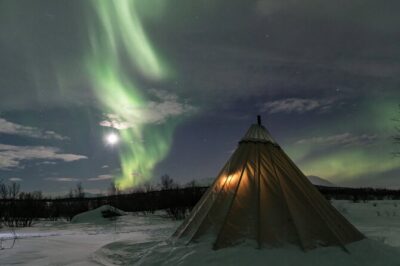
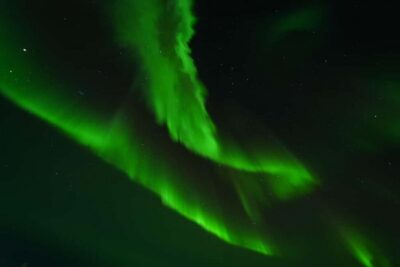
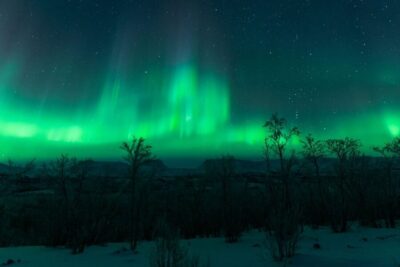
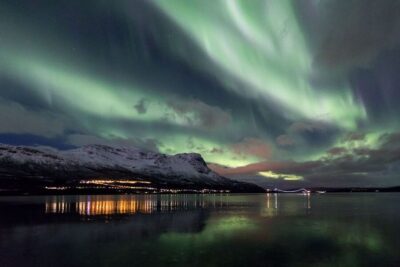
Northern Lights Tour from Kiruna to Abisko with Dinner
Read our review →Northern Lights Tour with Stejk Street Food Dinner
Read our review →
Browse the lists this tour appears in