
REVIEW · NORWAY
From Narvik: The Northern Lights Arctic Train Guided Tour
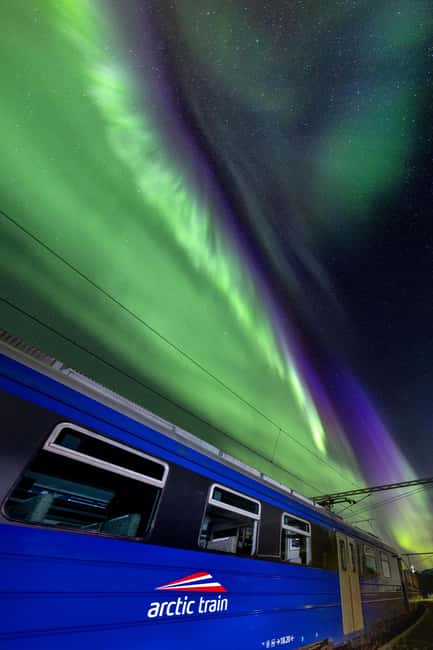
The best part of this experience is the journey into roadless Katterat, where the Ofoten Railway carries you away from Narvik’s lights and into a quiet Arctic night. You get a train ride, a campfire, a lavvu, railway stories, and a real chance to see the northern lights in one compact evening.
I like the combination of warm shelter and wild surroundings, and I like that the railway itself is part of the story rather than just a way to reach an observation point. The main catch is simple: the aurora is never guaranteed, and the first stop can have enough platform light to make viewing and photography frustrating.
Key points at a glance
- Remote viewing point: Katterat has no road access and sits 373 meters above sea level, far from city lights.
- A train-based aurora hunt: The round trip takes about 90 minutes, with 45 minutes each way from Narvik station.
- Campfire comfort: Hot drinks, a light snack, a fire, and a lavvu help take the edge off the Arctic cold.
- More than northern lights: Your guide covers railway history, local life, the old mountain village, and Katterat’s museum.
- Photography help included: Bring a camera and tripod, and expect practical photo tips from the guide.
- Come prepared for cold: Thermal clothing is not supplied, so hats, scarves, warm socks, and proper outerwear matter.
Leaving Narvik for the Ofoten Railway
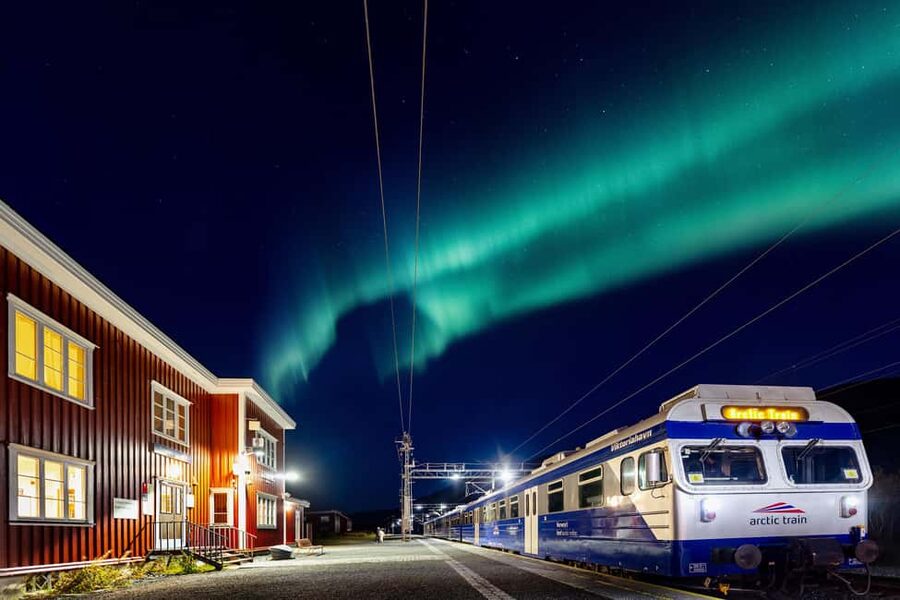
The evening begins at Narvik station, where you board a train for the 45-minute ride to Katterat. This is not a quick shuttle to a viewing field. The railway is one of the main attractions, and the darkening ride gives the evening a clear sense of purpose.
As the train moves away from Narvik, artificial light fades and the mountain country takes over. The train has subtle lighting, which helps you see outside without turning the carriage into a bright room. That small detail matters. Aurora watching works best when your eyes adjust to darkness, and excessive interior light can ruin the view from the windows.
Choose your seat with care. One passenger found that moving to the other side of the train meant missing the first glimpses of the aurora. Since the best side can change with the route and conditions, do not settle too quickly if the carriage is not full. Keep your camera ready, but also spend time looking through the window with your own eyes.
The train ride is especially useful for anyone who wants more than a standard bus chase. You are not racing between roadside pullouts. You are moving along a historic railway into a remote mountain area, with the darkness and changing weather becoming part of the experience.
Other northern lights trips people book around Norway:
- Tromsø: Northern Lights Safari with Expert Guides and Photos
★ 4.6 · 6,654 reviews - Tromsø: Northern Lights Pioneer Tour with Photos Included
★ 4.8 · 6,048 reviews - Tromsø: Northern Lights Chase with Photos and Bodysuits
★ 4.5 · 3,378 reviews
Why Katterat is the right stop
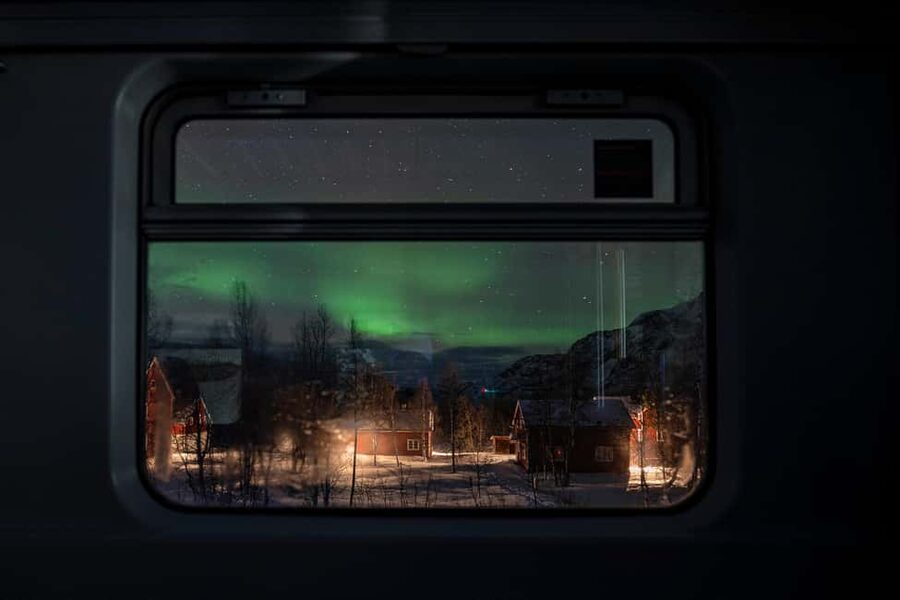
Katterat is 373 meters above sea level and has no road access. That makes it feel properly remote, even though you reach it by train in less than an hour. The lack of nearby roads and city lights gives the area better conditions for spotting the northern lights.
There is no promise that the sky will cooperate. Aurora activity depends on nature, clouds, and timing. One evening can bring spectacular dancing lights, while another offers only stars. That uncertainty is not a flaw in the tour, but you should accept it before booking. You are paying for a well-planned chance to see the aurora, not a guaranteed show.
The stop lasts about 1.5 hours. That gives you enough time to get off the train, hear the guide’s presentation, visit the old mountain village and museum, warm up, and watch the sky. It also means you are not left outside for the whole evening with no break.
Katterat’s quiet is part of its appeal. Even if the aurora stays hidden, you can still experience a dark Arctic setting with stars overhead and snow around the station in winter. One clear evening produced no northern lights but still made a pleasant trip because the stars and silence carried the night.
Campfire, lavvu, and a practical break from the cold
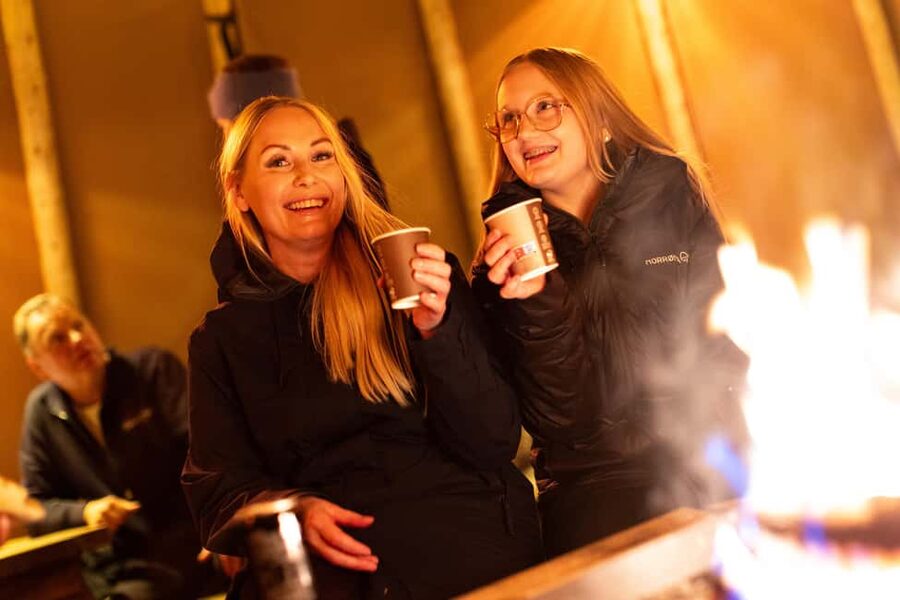
At Katterat, the group gathers around a bonfire. The host provides hot drinks and a light snack, and a traditional lavvu offers shelter and extra warmth. Some evenings also include marshmallows by the fire, which adds a welcome bit of fun without taking over the main event.
The heated shelter is more important than it may sound. Standing still while waiting for the aurora can feel much colder than walking through town, especially in wind or snow. A place to warm your hands, drink something hot, and wait for the guide’s advice makes the viewing period easier.
A useful detail from one evening is that the guide kept people inside the heated tent until it was worth going out. That approach makes sense. You do not need to spend the full stop shivering beneath a cloudy sky. When conditions improve, the guide can direct you outside.
Still, do not treat the fire and lavvu as a substitute for good clothing. Thermal suits are not included, and you need weather-appropriate layers, a hat, scarf, warm socks, and proper thermal clothing. Bring gloves as well, even though they are not specifically listed among the required items. The information provided makes clear that this is an outdoor Arctic activity, not a warm indoor viewing show.
The railway stories add real substance
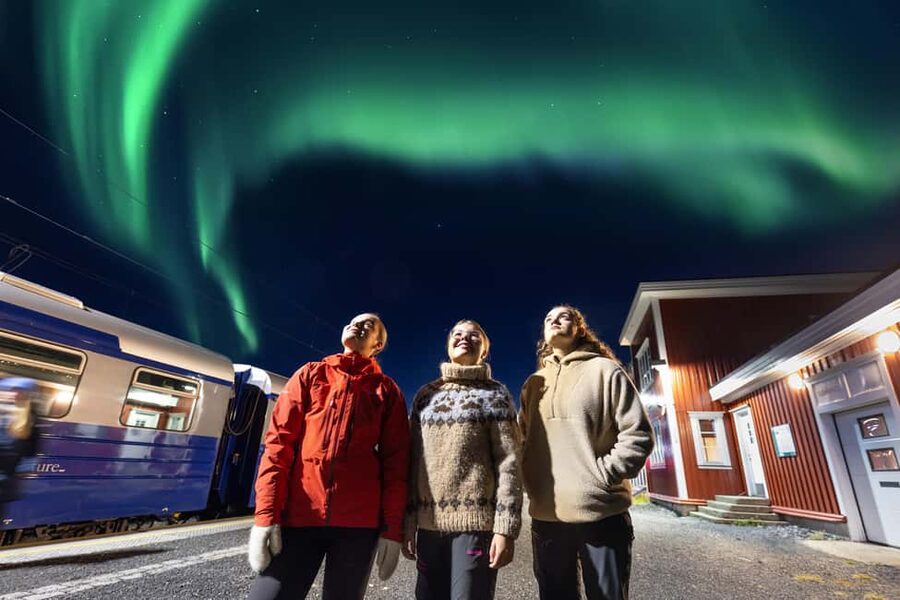
The guide does more than point at the sky. During the stop, you hear about the railway’s importance, the surrounding mountains, and everyday life in the Arctic. You also visit the old mountain village and Katterat’s museum.
That context gives the night more weight. Without it, the trip could feel like a simple ride to a dark platform. With it, you gain a sense of why the railway exists and how a remote settlement fits into the region.
Guide quality appears to make a big difference. Anajolie received especially warm praise for her presentation and ability to make the excursion engaging. Another guide was described as enthusiastic and helpful with information, photography, and the fires. Since the language is English, you should be comfortable following an English-speaking presentation.
The tour also includes a Northern Lights documentary. This is useful during a quiet spell or while the group is warming up. It gives you some scientific and visual background, though the real value of the evening remains the setting itself and the chance to watch the sky outdoors.
More Guided Trips in Norway:
- Tromsø: Northern Lights Tour with Local Guide and Photos
★ 4.9 · 487 reviews - Tromsø: Northern Lights Chase with Local Guide & Free Photos
★ 4.8 · 425 reviews - Tromsø: Northern Lights Tour w/Photo, Suits and Local Guide
★ 4.9 · 165 reviews - Tromsø: Northern Lights Tour with Dinner and Native Guide
★ 5.0 · 162 reviews
Seeing the aurora, and handling a cloudy start
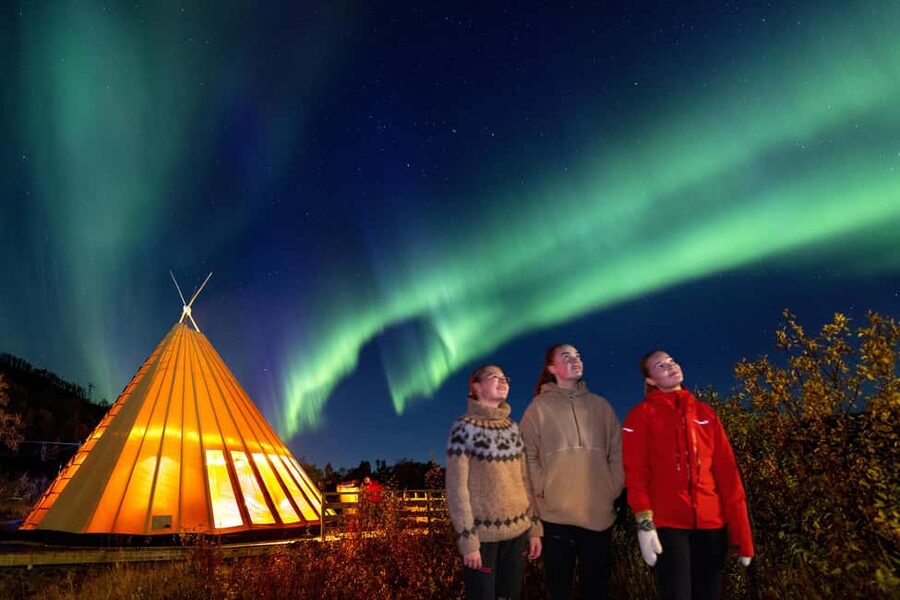
The northern lights can appear when you least expect them. One particularly encouraging account began with cloud over Narvik, leading to low expectations. Later, at a second stop, the sky opened into stars and dancing aurora above deep snow.
That is a good reason not to judge the night during the first few minutes. Conditions can change as the train travels inland and higher into the mountains. The first viewing area may also have platform lighting that interferes with cameras. If your phone or camera shows nothing at first, your eyes may still be missing a faint glow, or the conditions may improve farther from the station lights.
The guide can offer photo tips, but you need to bring the right equipment. A tripod is specifically recommended. For night photography, a stable camera matters far more than a quick snapshot from your phone. Keep spare batteries warm if you have them, since cold can reduce battery life, and avoid spending the whole stop staring at a screen.
The most important rule is to protect the experience from disappointment. No company can guarantee the northern lights, their timing, or their strength. If the aurora appears, it may be faint, brief, or bright enough to fill the sky. If it does not appear, you still have the train journey, the fire, the village, the museum, the stars, and the Arctic setting.
Returning to Narvik after the mountain stop
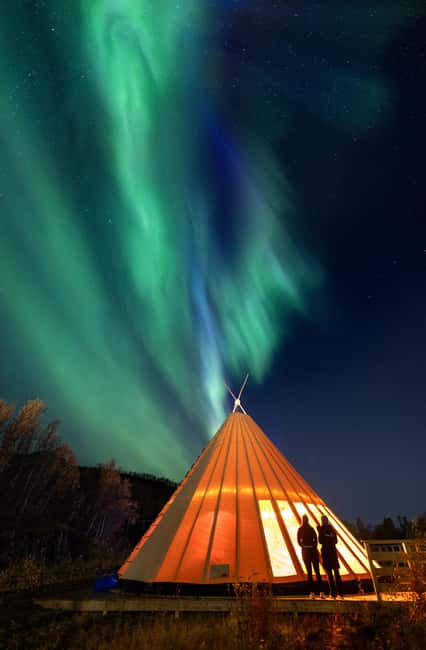
After the Katterat visit, you board the train for the 45-minute ride back to Narvik. The return trip gives you a chance to warm up, talk through the evening, and look out at the dark route again.
The total duration is about three hours. That is a good length for visitors who want an evening activity without committing to a long overnight chase. It also fits well into a Narvik stay, since the starting and ending point is Narvik station.
Boarding may not be perfectly smooth. One passenger found the process somewhat disorganized and reported that refreshments ran short for people at the back of the line. I would arrive ready to board, listen carefully for instructions, and collect your drink or snack when offered rather than assuming supplies will be available indefinitely.
The train itself is warm, which makes the return trip comfortable after time outside. This matters on a cold night, especially if you have spent time taking photos or standing near the fire.
Is $156 a fair price?
At $156 per person, this is not a cheap train ride. The value depends on what you want from an aurora evening.
If you only want the lowest-cost chance of seeing the northern lights, a simple viewing excursion may cost less. But this experience includes round-trip rail travel, a live English-speaking guide, a campfire, hot drinks, a light snack, photo advice, the museum and old village visit, and the Northern Lights documentary. You are also paying for access to a remote place that cannot be reached by road.
I think the price makes the most sense for visitors who value the setting and the railway as much as the aurora itself. The trip still has a purpose on a night without lights because Katterat, the stars, the fire, and the local stories remain part of the evening.
The value is weaker if you need a guaranteed spectacle or dislike being outside in winter. Aurora trips always carry some risk, but here the included activities give you more to enjoy while nature makes up its mind.
Who should book this Arctic train ride?
I would recommend it to adults and older children who enjoy scenic rail journeys, local history, photography, and quiet outdoor settings. The minimum age is seven, so it is not designed for very young children. Anyone in your group who cannot handle cold conditions should think carefully, since thermal suits are not provided.
It suits first-time northern lights visitors who want structure. You do not need to plan the railway route, find a dark location, arrange a fire, or work out where to warm up. The guide manages the evening and adds context along the way.
It also suits people who have already seen the aurora but want a different setting. A road-based chase can feel practical and hurried. This train journey has a stronger sense of place, with a remote station, railway stories, and a traditional shelter.
I would be more cautious if your main goal is serious astrophotography. The tour includes photo advice and recommends a tripod, but the stop has some lighting near the platform, and you cannot control how long the group remains in one position. It is a guided cultural and nature outing, not a private photography session.
Wheelchair users cannot join this activity, according to the stated restrictions. You should also check the evening’s starting time before booking, since availability varies.
Small details that make the evening better
Wear more than you think you need. Warm socks, a hat, scarf, thermal layers, and a solid outer layer will let you focus on the sky instead of your fingers and toes. The fire and lavvu help, but you may still spend time outside waiting.
Bring a tripod if you want more than casual photos. A camera is recommended, but do not forget that the strongest memory may be the view without a screen in front of you.
Keep your expectations flexible. The aurora may appear during the train ride, at the station, or later during the stop. It may also stay away. The best approach is to treat the lights as the bonus, while the train, the remote station, the stars, and the stories form the main evening.
The cancellation policy is useful for uncertain weather planning: you can cancel up to 24 hours ahead for a full refund, and you can reserve now and pay later. That flexibility does not remove the weather risk, but it makes planning a little easier.
Should you book the Northern Lights Arctic Train?
Book this tour if you want the northern lights wrapped into a memorable rail journey, not just a quick stop beside a road. The remote Katterat station, warm lavvu, campfire, museum, and railway stories give the evening value even when the sky stays dark.
Skip it if you need guaranteed aurora viewing, a private photography setup, or a fully indoor experience. At $156, the tour asks you to pay for the whole Arctic setting. For the right person, that is the point: the lights may be spectacular, but the quiet ride into Katterat is what makes the evening special.
FAQ
How long is the Northern Lights Arctic Train tour?
The experience lasts about 3 hours. The train ride from Narvik to Katterat takes about 45 minutes, the stop at Katterat lasts about 1.5 hours, and the return train ride takes another 45 minutes.
Where does the tour begin and end?
It begins and ends at Narvik station in Nordland County, Norway.
Are the northern lights guaranteed?
No. The northern lights are a natural phenomenon, and the tour cannot guarantee if they will appear, when they will appear, or how strong they will be.
What is included in the price?
The price includes the round-trip train ticket, a guide, hot beverages, a light snack, a bonfire, photo tips, a Northern Lights documentary, a visit to the old mountain village, and a museum visit at Katterat.
What should I bring?
Bring a hat, camera, warm socks, scarf, weather-appropriate clothing, a tripod, and thermal clothing. Thermal suits are not included.
Is the tour suitable for everyone?
The tour is not suitable for children under seven or wheelchair users. It is conducted in English and includes time outdoors in Arctic conditions.
Just added around Norway
- Tromsø: Snowmobile Tour with Aurora Crystal Lavvo Stay★ 4.8 · 66 reviews
- Tromsø: Premium Northern Lights Tour Small Group 8 Guests★ 5.0 · 4 reviews
- Tromsø: Small-Group Northern Lights Chase by Van with Photos★ 5.0 · 10 reviews
- Tromsø: Northern Lights Tour (Max 8) Pickup + Finland★ 5.0 · 4 reviews
- Sami Culture, Northern Lights & Reindeer Visit at Camp Tamok★ 4.4 · 22 reviews
- Tromsø: Private Aurora Chase with Meals, Campfire, Photos.★ 5.0 · 2 reviews
- Tromsø: Private Northern Lights Chase 2-8 guests★ 4.9 · 6 reviews
- Tromsø: Private Northern Lights Chase by Mercedes V-class★ 4.6 · 10 reviews
Guided, compared.
Northern Lights Guided Bus Tour from Reykjavik
Read our review →
Northern Lights Tour with Local Guide and Photos
Read our review →
Northern Lights Chase with Local Guide & Free Photos
Read our review →
Northern Lights and Stargazing Small-Group Tour with Local Guide
Read our review →Browse the lists this tour appears in